Abella Scalping Robot EA MT4
Abella Scalping Robot EA is a fast MT4 scalper using channels, momentum, and MA filters. Full backtest review with drawdown and balance analysis.
Description
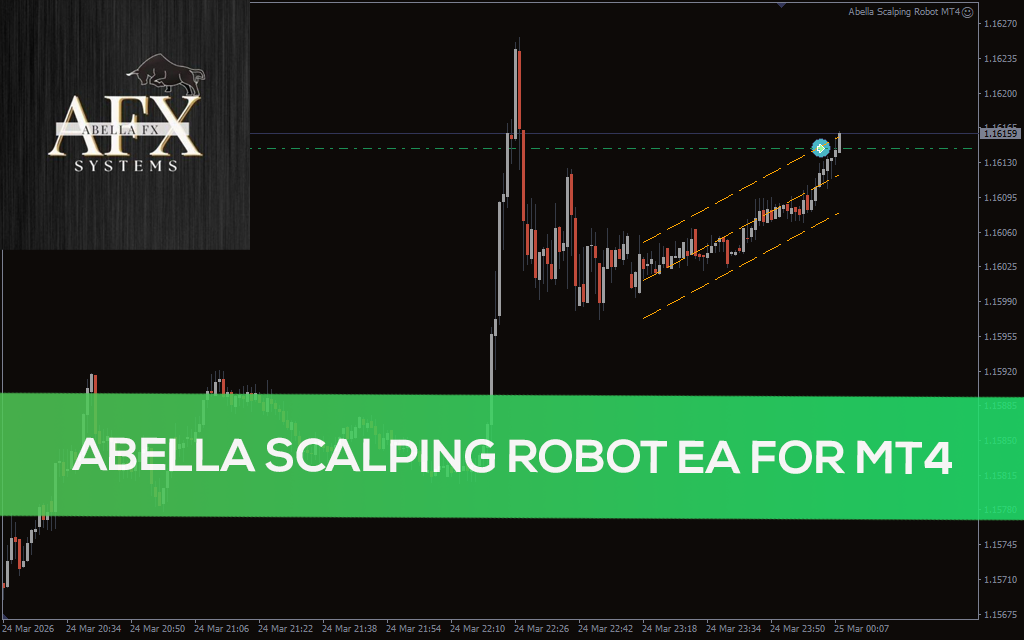
Abella Scalping Robot EA is a short-term trading system designed for MetaTrader 4 that utilizes channel breakout logic, momentum, and moving average filters. According to both the settings and chart behavior, the EA apparently works to capture small intraday moves and is optimally designed for lower timeframes such as M1 or M5.
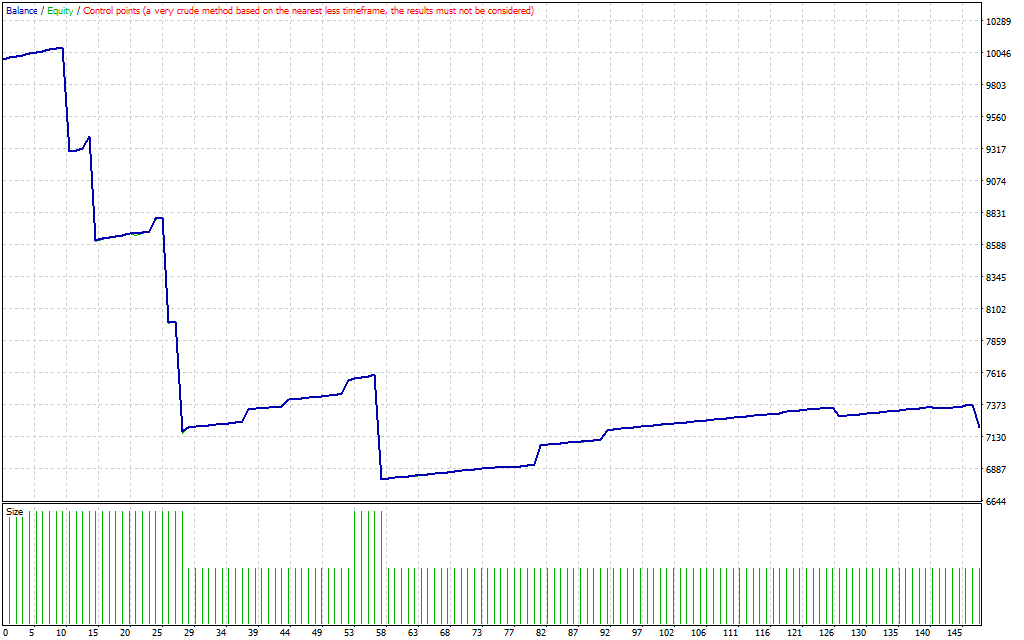
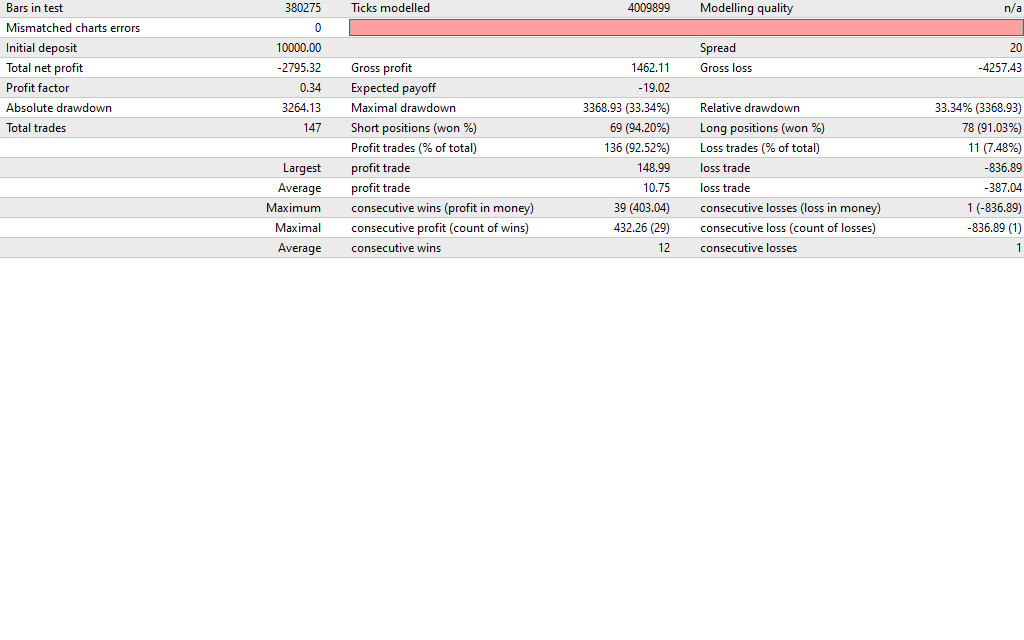
Having reviewed the backtests and balance curve, I can say I see that the system looks like that of a typical scalping profile with aggressive entries and relatively large Take Profit targets compared to the timeframe. The test began with a $10,000 deposit and closed with a loss of -$2,795.32, making for a substantial drop in the balance.
The profit factor is so low (0.34) that losses outweigh profits by a large margin. The wins also remained elevated at over 92%, which is impressive, but in practical implementation hides a serious imbalance between small wins and large losses.
Abella Scalping Robot EA Recommended Settings
- Currency Pair: EURUSD
- Timeframe: M1 – M5
- Minimum Deposit: $10,000
- Leverage: 1:100 or higher
- Account Type: ECN / Low spread account
Features of Abella Scalping Robot EA for MT4
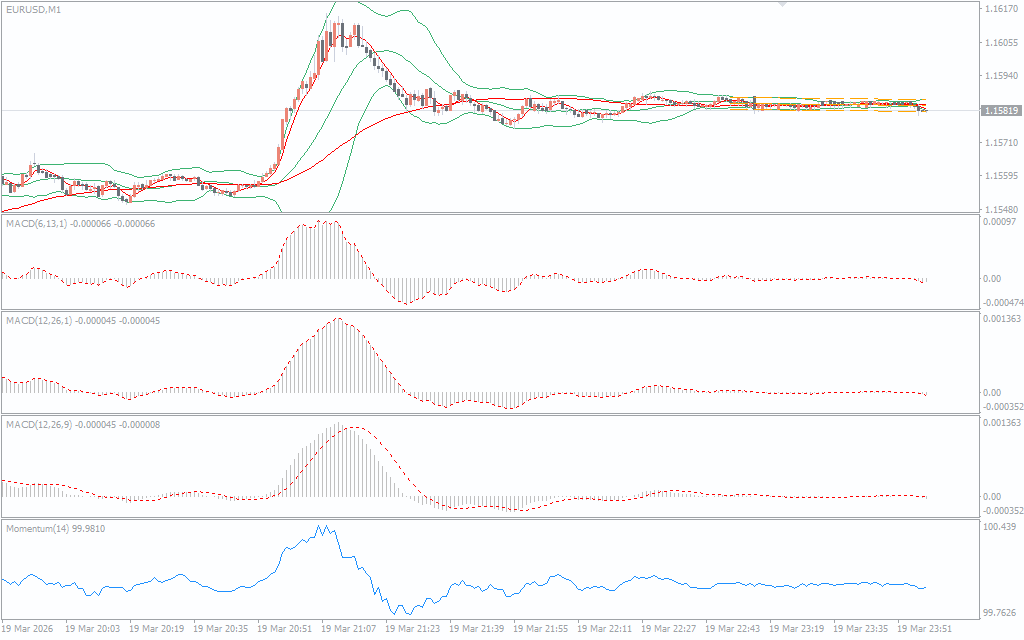
Abella Scalping Robot EA filters entries through a set of technical tools. At its core, the system is a price channel which provides dynamic support and resistance zones. Trades are triggered when price interacts with these channel boundaries, combined with momentum thresholds and moving average confirmation.
The EA has “no loss” functionality and break-even logic to protect trades once a certain profit level is reached. Trailing stop is also used, allowing positions to stay open during favorable moves.
My testing experiences show the system to be very active and responsive to market movements. It works best in stable conditions in which price respects short-term structure and doesn’t generate sudden spikes.
Strategy
The strategy is primarily based on channel-based scalping. The EA recognizes price movement in a specific range and tries to trade as soon as momentum signals a breakout or continuation scenario. Both fast and slow moving averages act as directional filters, while momentum parameters help avoid weak entries.
But during testing I found that the main problem was in the distribution of the risk. The EA wins a lot of the time, but the size of losing trades is significantly larger than the average profit. This results in one or two bad trades erasing many of those gains.
The balance curve does not disguise this. It begins fairly steady, then experiences sharp drops, followed by slow recovery phases that fail to fully compensate for losses. The drawdown is recorded to a maximum of 33.34%, very high for a scalping system.
Trading Signals
Signals are created automatically when price interacts with the channel and momentum conditions are met. Buy trades are usually opened when the price breaks upward with supporting momentum, while sell trades occur during downward movements confirmed by the same logic.
The EA maintains a high frequency of trades, but according to the backtest, a good win rate does not mean consistency in the system. The average profit trade was around $10.75, but the losses were much higher, including a single loss of over -$836. This imbalance is the main reason why the EA underperforms despite appearing statistically strong at first glance.
Conclusion
Abella Scalping Robot EA is a clever example of a high-frequency scalping architecture, which utilizes channels, momentum, and moving averages in the trading logic. It demonstrates robust win rate qualities and active trading activity, but the backtest data points to a major failure in risk management. Large losses compared to small profits ultimately lead to an overall shrinking balance over time.
This EA, from my perspective on working with one like this for instance, needs a lot of tuning, mostly in Stop Loss control and profit-to-risk ratio. In the absence of these modifications, it is better suited for testing environments rather than actual trading.

1 2 3 4 5