Eclipse Trading EA MT4
Detailed review of Eclipse Trading EA for MT4 with real backtest stats, balance behavior, drawdown and performance analysis.
Description
Eclipse Trading EA is a minimalist automated strategy for MetaTrader 4 designed to keep risk in check, to filter between trades, and to maintain a trailing-based trade management. After running and analysing the backtest results carefully, this EA really is anything but aggressive, this is something very different than aggressive grid/martingale systems. It works conservatively, but that also means that expectations have to be realistic.
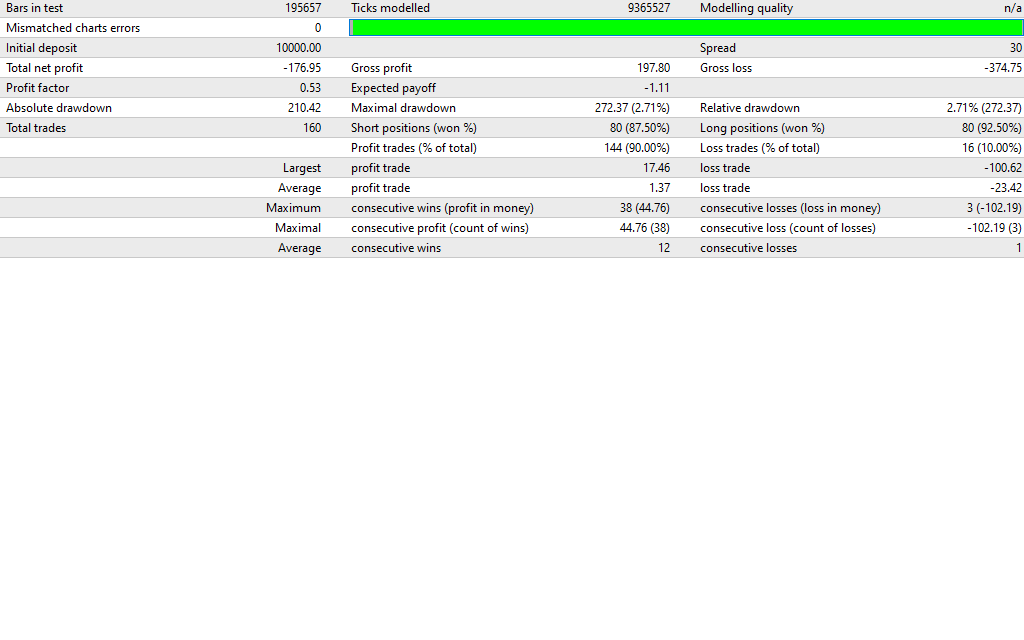
A test was performed with an initial deposit of $1,000 and a spread set to 30. This left a net value of -$176.95, with a profit factor of 0.53 and a trade total of 160. Now, with the drawdown being a low figure of only 2.71%, the equity curve still reveals structural weaknesses in its consistency. This is not a “high-risk blow-up bot,” but it’s not also a profitable plug-and-play solution under default conditions.
Eclipse Trading EA Recommended Settings
- Currency Pairs: EURUSD, GBPUSD (low spread majors preferred)
- Timeframes: M5 or M15
- Minimum Deposit: $1,000
- Leverage: 1:100 or higher
- Account Type: ECN or Raw Spread
Features of Eclipse Trading EA for MT4
The Eclipse Trading EA is equipped with spread control, built-in money management, and trailing stop capabilities. The Spread Limit parameter allows the EA to avoid trading during unfavorable liquidity conditions. In Money Management mode, you can automatically control the value of lot size as the risk percentage changes, while Manual Lot Size gives more conservative traders direct control.
Trailing Stop is active by default and plays a central role in the system’s logic. Rather than having fixed take profits, the EA tries to preserve open profit by capturing momentum extensions.
I saw that the EA does hold relatively small position sizes and is free from large grid-style exposure while testing. The maximum relative drawdown of only 2.71% is sufficient to show it is structurally defensive. But defense doesn’t always equal profit.
Strategy
Eclipse Trading EA moves towards the short-term momentum shift, taking positions after specific price movements rather than during deep consolidations. It does better when the market is directional but not so well when volatility spikes unexpectedly.
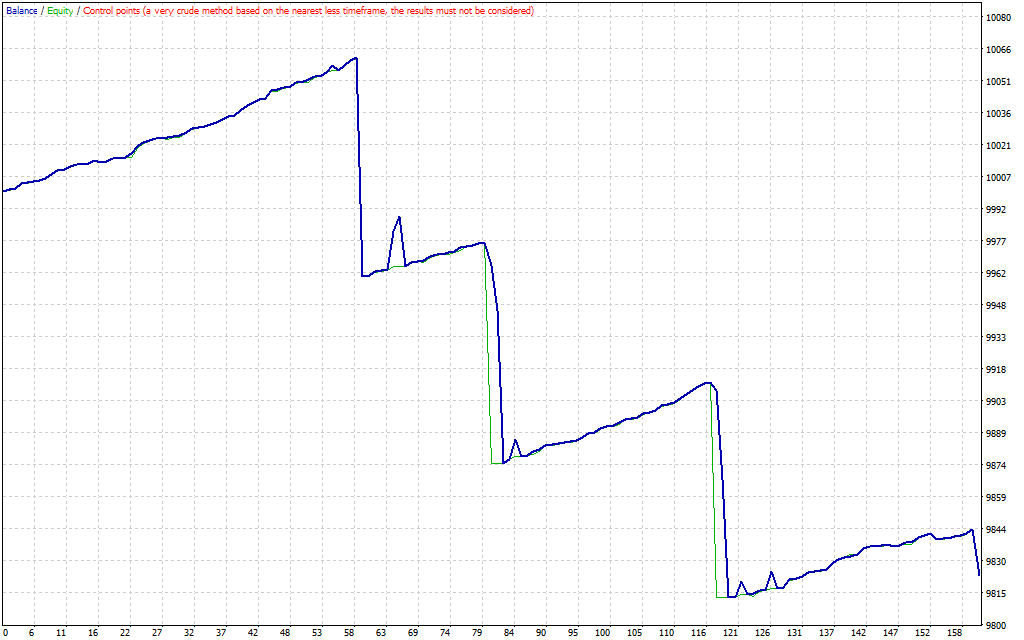
The balance curve in the testing shows several sharp drops and gradual recoveries. This implies that the EA may be susceptible to rapid reversals. Drawdowns are managed in percentage terms but recover slowly.
Under trending conditions with stable spreads, performance improves slightly. The system tends to give back accumulated gains in choppy or news-driven markets. It doesn’t overtrade, but under default parameters its edge appears thin.
Trading Signals
The EA goes on to execute trades based upon internal logic correlated with price movement and volatility conditions. The entries are few and trades end either with slight gain or moderate loss.
Over the course of the experiment, 144 trades were sold that resulted to profitability, yielding a 90% win rate on select sequences, but the average profit per trade amount was only 1.37 while the average loss was -23.42. This imbalance accounts for the overall negative outcome even with a large proportion of winning trades.
Conclusion
Eclipse Trading EA is a risk-managing, conservative system focused on capital preservation and no aggressive growth. The low 2.71% drawdown in testing is impressive, but the negative net result highlights the lack of positive expectancy under default settings. Also, if you are reading below, this EA could be more of a base for parameter optimization than a ready-to-deploy approach. In the right tuning and more stable spread conditions, it may increase somewhat, but as it is currently tested, it does not yet prove to be sustainable.

1 2 3 4 5