


Polynomial Regression Extrapolation Indicator
Forecast future market moves using LuxAlgo’s Polynomial Regression Extrapolation Indicator for MT5. Trend curve + projection in one tool.
Description
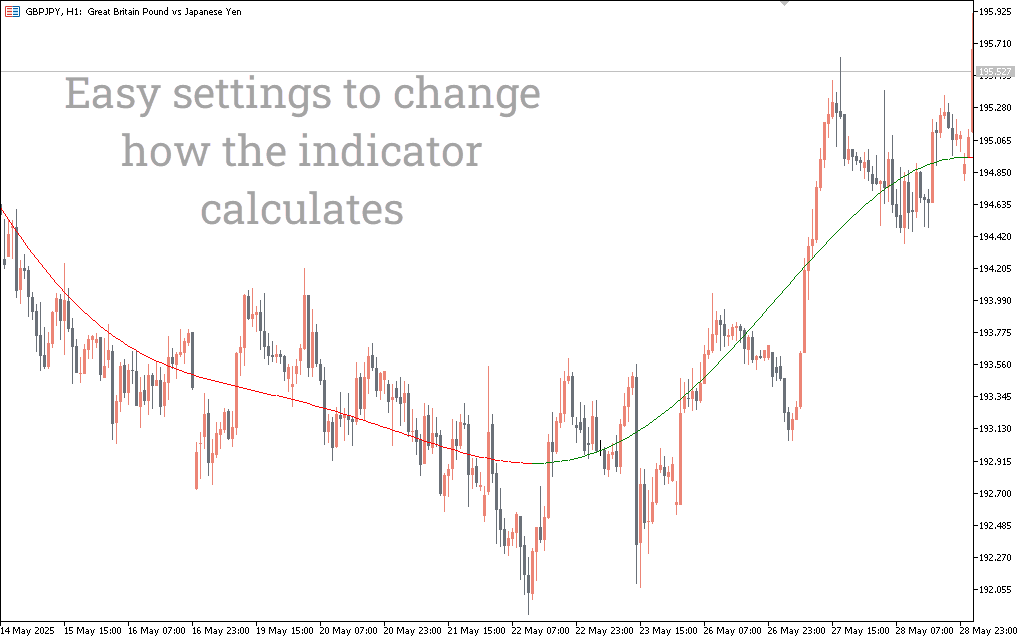
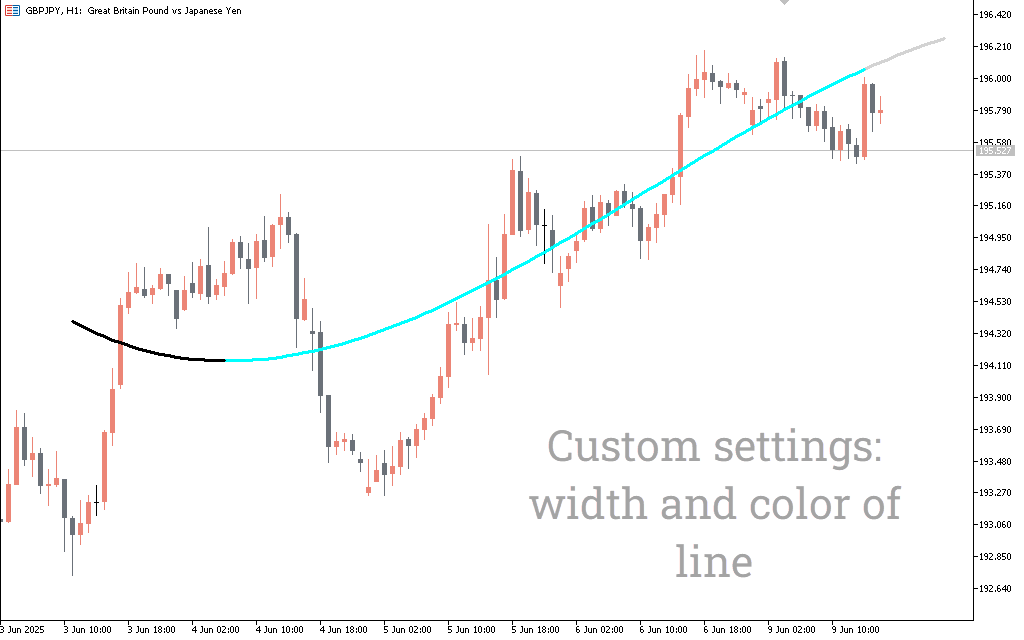
The Polynomial Regression Extrapolation Indicator for MetaTrader 5 offers a forward-looking approach to trend analysis by modeling price action through polynomial curve fitting. Created by LuxAlgo, this indicator not only smooths historical price data but also extends the trend path into the future, helping traders visualize potential price trajectories. With its curvature-based output and extrapolation capabilities, it serves both trend followers and mean reversion traders looking for visual confirmation and predictive structure on the chart.
Polynomial Regression Extrapolation Indicator MT5 Trading Signals
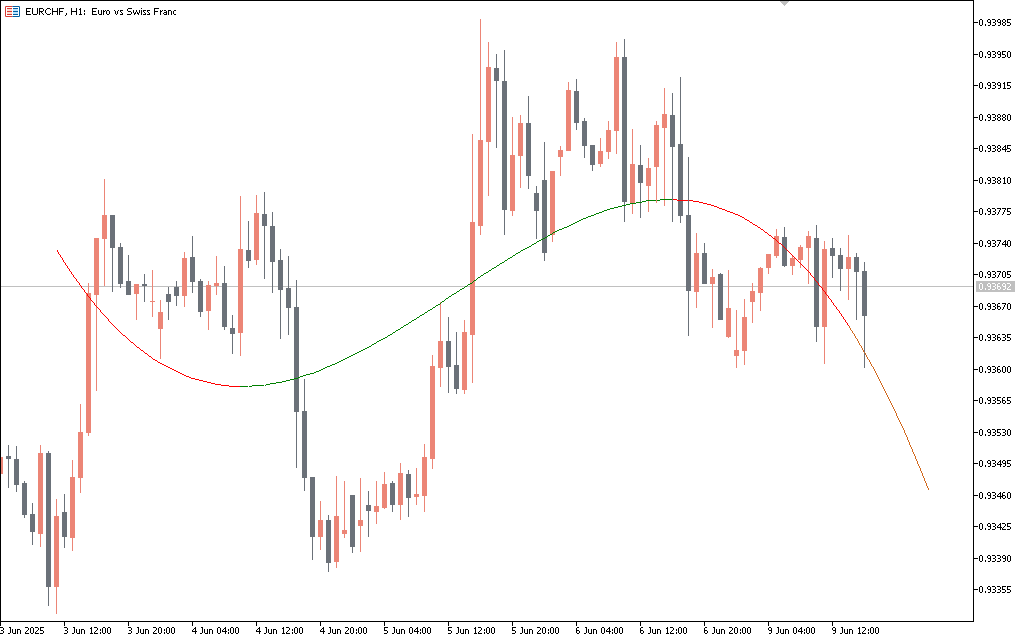
Instead of issuing traditional buy/sell signals, the Polynomial Regression Extrapolation Indicator displays a colored curved line that adapts to recent price behavior and extends forward as a projected path. When the curve shifts direction or changes color—from green (bullish) to red (bearish)—it suggests a potential turning point in trend momentum. Traders often use the curvature’s inflection points and projected end to anticipate future resistance or support. If the price is diverging from the projected path, it can signal exhaustion or a setup for a reversal. Meanwhile, price following the curve suggests a continuation phase. This visual dynamic allows for anticipatory entries and exits rather than reactive trades.
Conclusion
The Polynomial Regression Extrapolation Indicator MT5 by LuxAlgo transforms trend analysis by adding predictive insight directly to your charts. Its unique visual curve helps traders estimate where price might be heading next, enhancing planning for entries, exits, and stop placement. Whether you’re riding a trend or preparing for a turning point, this tool delivers a refined, forward-looking edge backed by polynomial regression math. It’s especially valuable for those who prefer visual intuition without relying on noisy, lagging indicators.