

Fibonacci Progression With Breaks Indicator
Visualize Fibonacci-based price expansions with dynamic break tracking using LuxAlgo’s Fibonacci Progression With Breaks Indicator for MT5.
Description
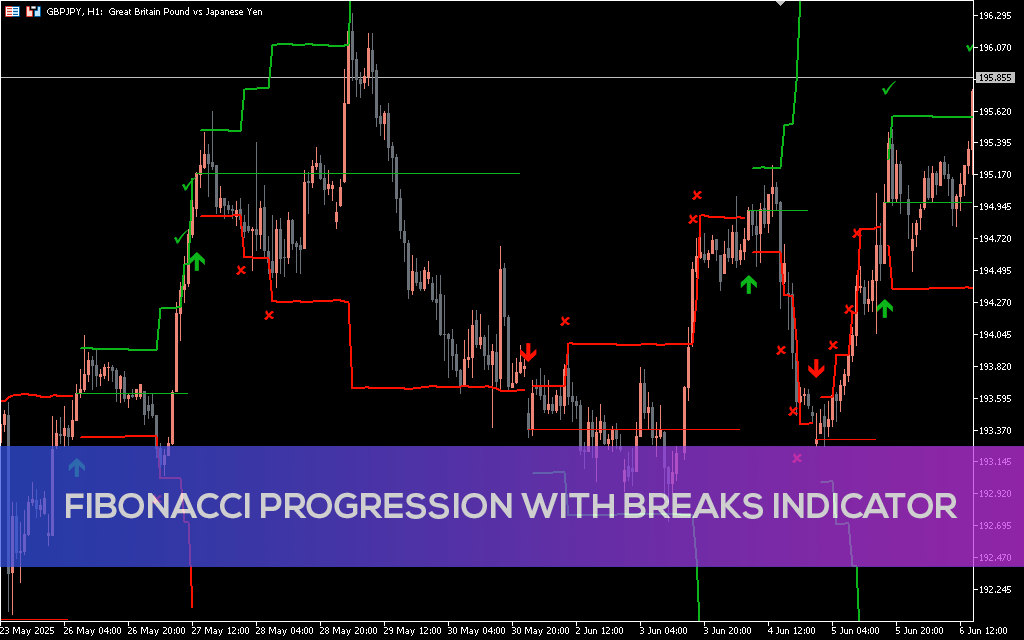
The Fibonacci Progression With Breaks Indicator for MetaTrader 5 by LuxAlgo applies the logic of Fibonacci number sequences to price action in a stepwise, progressive structure. It identifies and plots clear directional levels based on volatility-adjusted Fibonacci sequences and marks when the price breaks structure to form new trends or retracements. This tool is especially useful for traders who work with Fibonacci theory, trend continuation models, and breakout zones.
Fibonacci Progression With Breaks Indicator Trading Signals
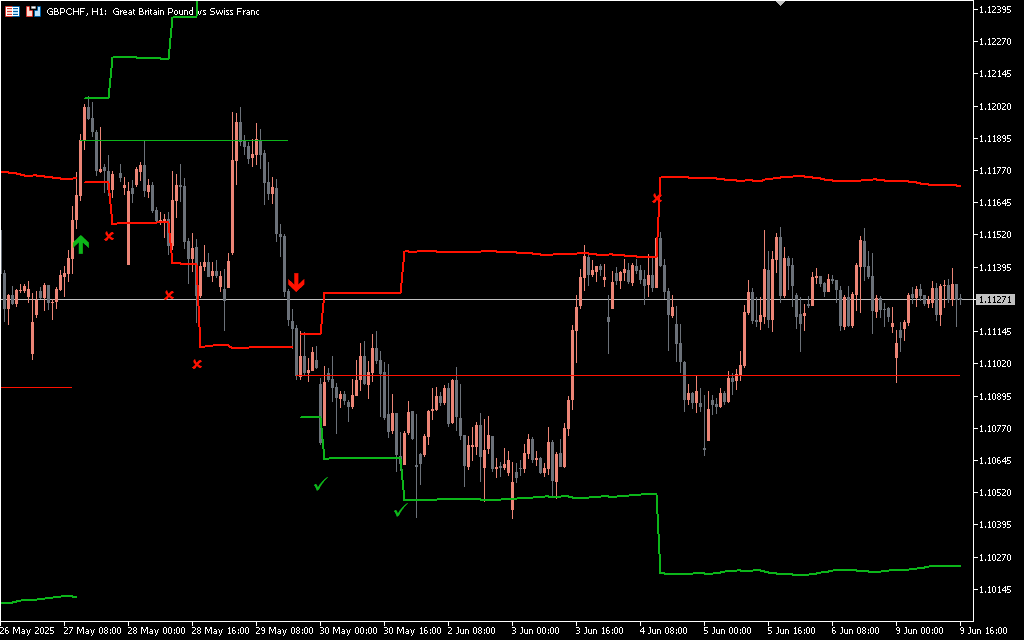
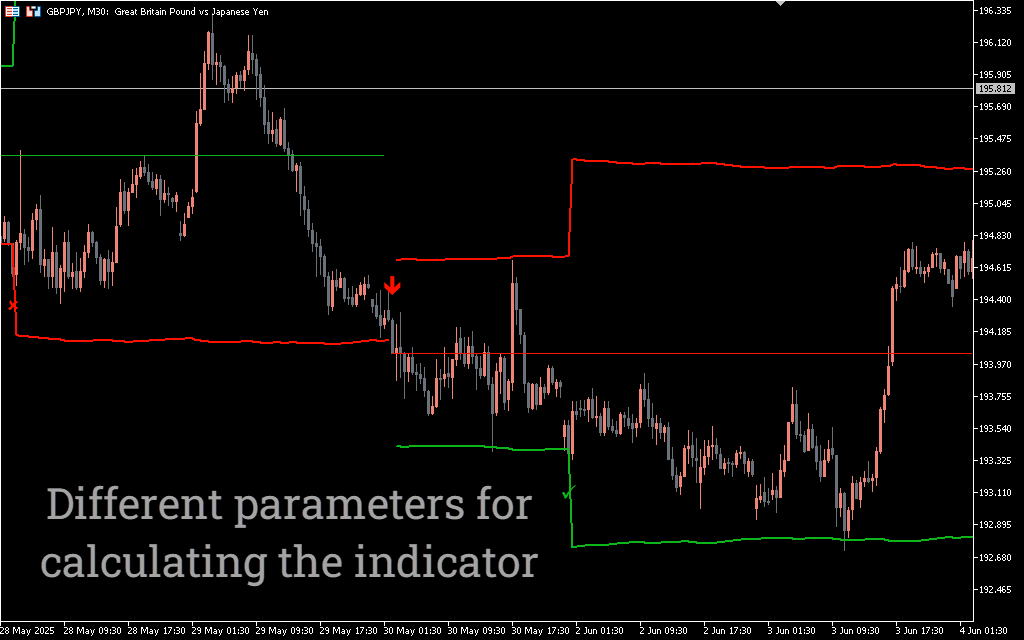
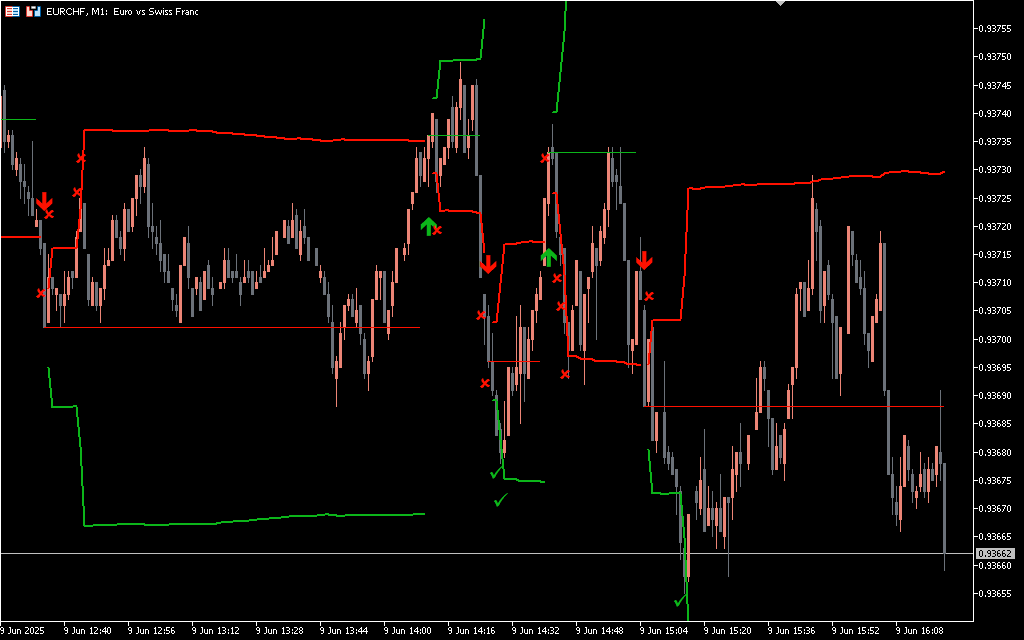
The indicator draws projected price levels that follow Fibonacci-based distance progression, starting from a pivot and extending outward until a structural break occurs. These breaks—clearly marked with arrows or symbols—indicate when the market has moved far enough to warrant a reset or new leg of progression.
In an uptrend, price rises through levels like 1, 2, 3 (based on Fibonacci spacing) until a breakdown below a volatility-derived baseline (such as ATR). In a downtrend, the inverse occurs. These Fibonacci steps serve both as target zones and dynamic support/resistance.
Each break resets the count, offering a new sequence from a fresh trend leg. This gives traders real-time insight into whether price is progressing normally, becoming overextended, or showing early signs of reversal.
Conclusion
The Fibonacci Progression With Breaks Indicator from LuxAlgo offers an innovative way to apply Fibonacci logic to modern market behavior. By combining dynamic volatility sizing with structured progression levels and break detection, this tool helps traders clearly define price stages within a trend. It works particularly well in breakout, swing, and trend-trading strategies where step-by-step market progression is essential for entries, exits, and risk control.